From Language Preservation to Cultural Dialogue:
How Knowledge Crosses Borders Through Human Connection
Fondation Inalco supports a truly unique institution: a place where more than 100 languages are taught and where students, researchers, and scholars from over 120 nationalities interact on a daily basis. This diversity is not simply a characteristic of Inalco, it is at the heart of its mission.
At Fondation Inalco, we believe that languages are much more than tools of communication. They provide access to different ways of understanding the world, different histories, and different systems of knowledge. By supporting Inalco, we help create opportunities for dialogue across cultural, linguistic, and geopolitical boundaries.
This is particularly visible through the Fondation’s support of international immersion scholarships and research programs. These experiences allow students and researchers not only to deepen their academic expertise, but also to engage directly with the societies they study. Time spent in the field often changes perspectives in ways that classroom learning alone cannot.
A recent example that illustrates this impact is the Fondation’s support for a master’s student researching Nyangkha, an under-documented Tibetan language spoken by around 8 000 people in the mountains of northern Bhutan.
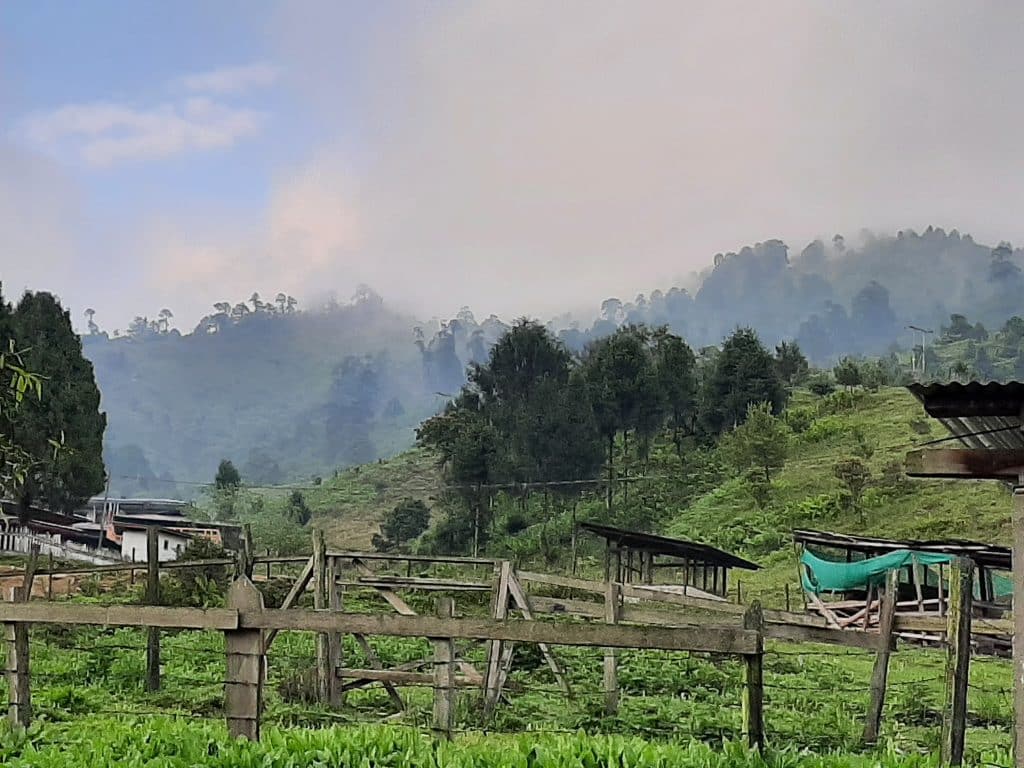
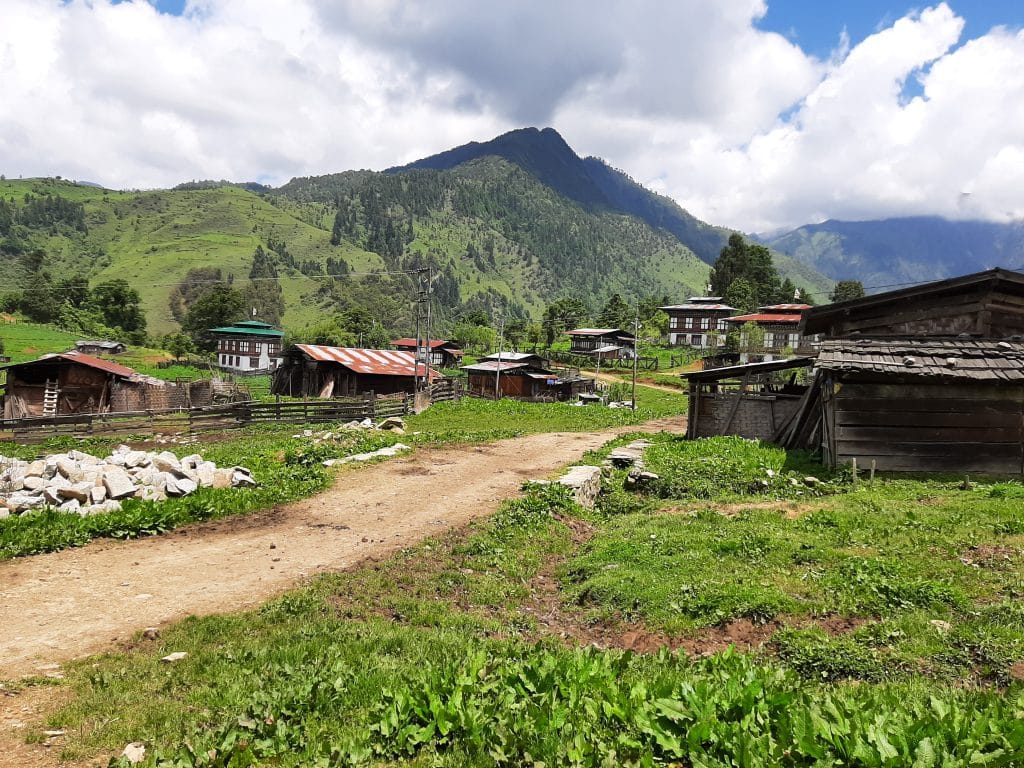
Village of Lamdji in the Sephu Valley, Bhutan
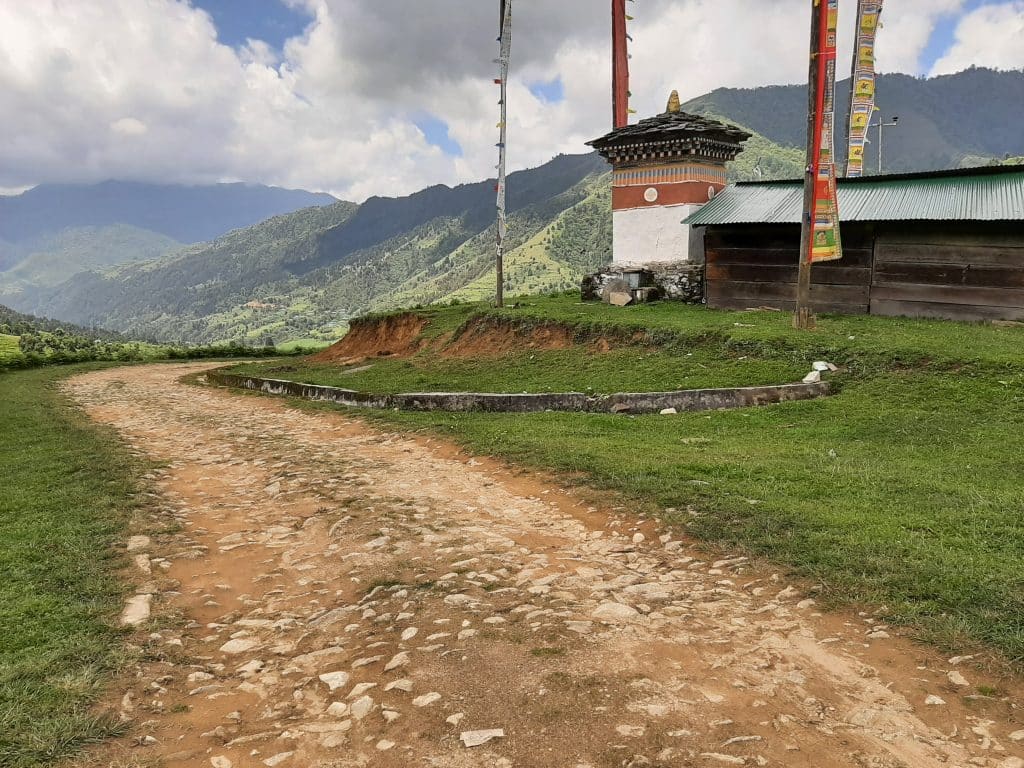
Village of Menchugang in the Sephu Valley, Bhutan
Thanks to a mobility grant, the student was able to spend time in Bhutan working directly with native speakers, recording oral histories and documenting a language that remains largely unknown outside the region. This work contributes to scientific knowledge while also helping preserve an important part of the cultural heritage of the Nyangkha-speaking community.
What makes projects like this particularly meaningful is the human dimension. By working closely with local speakers and communities, the student did not approach Nyangkha simply as an object of academic study, but as a language embodied in everyday practices. The fieldwork created a genuine dialogue between academic knowledge and community knowledge: local speakers became active contributors to the preservation and transmission of their own linguistic heritage, while the student gained a deeper understanding of how language shapes social ties.
Few institutions combine the linguistic expertise, fieldwork training, and long-term commitment needed to make such encounters possible. For us, this is a powerful example of how knowledge can cross borders while remaining rooted in local communities. It shows how linguistic research can foster both scientific discovery and genuine intercultural understanding, by enabling local voices to be heard and shared with a wider community of knowledge.
Beyond Exchange: Cultivating the Next Generation of Experts and Cultural Ambassadors
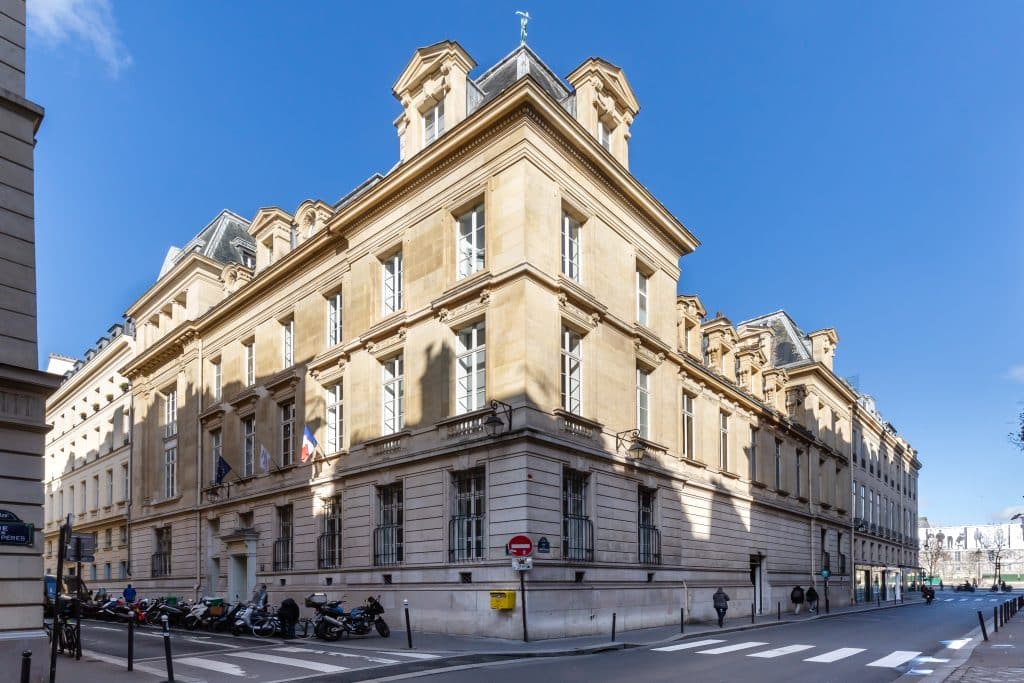
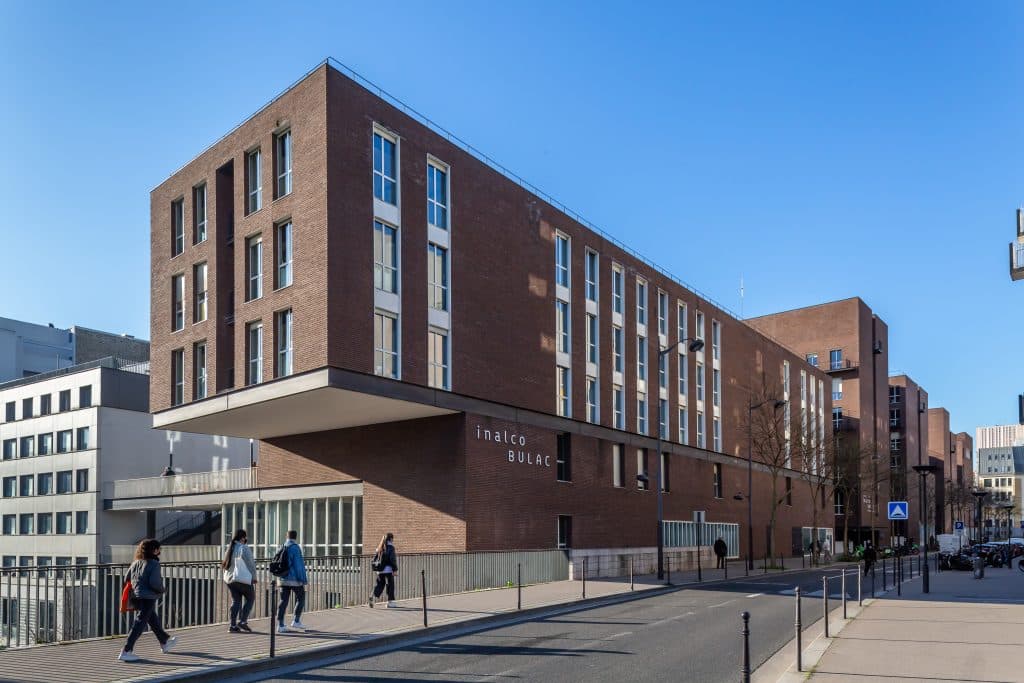
Maison de la Recherche, one of Inalco’s historic buildings
As Fondation Inalco strengthens its connections in Hong Kong and across Asia, our ambition goes far beyond increasing the number of exchanges or research collaborations.
What we hope to create is not simply more exchanges, but deeper expertise. Inalco’s strength lies in its ability to train specialists who engage with societies through their languages. This linguistic expertise allows them to access local perspectives, understand cultural nuances, and work in diplomacy, international organisations, journalism, education, or research with a deeper understanding of the societies they engage with.
The challenge today is not simply to train experts, but to prepare people who can navigate different cultural and linguistic environments with confidence. In a world where international issues are often discussed through simplified narratives, the ability to understand societies in their own languages has become increasingly valuable. Strengthening ties with Asian partners creates opportunities for students and researchers to build long-term relationships, share knowledge, and engage with perspectives that enrich both sides. These experiences also strengthen research on Asian languages, histories, and cultures, helping to develop knowledge that is both academically rigorous and grounded in lived realities.
What often strikes us is how transformative these experiences can be. Students frequently return from an immersion programme with a more nuanced understanding of the societies they have studied. They are better equipped to challenge stereotypes, explain cultural contexts, and build dialogue between different communities.
Over the years, we have seen that the most valuable outcome of an exchange is often not the project itself, but the lasting relationships and understanding that emerge from it. Research projects come to an end, but the networks, collaborations, and perspectives developed through these experiences continue to shape careers and foster dialogue for years afterwards.
Ultimately, our goal is to give students and researchers the opportunity to engage directly with societies, languages, and perspectives that they might never encounter otherwise. The expertise developed through these exchanges remains valuable long after individual projects have ended because it is built on relationships and first-hand experience. This is how we help train the next generation of experts and cultural ambassadors: individuals who can interpret complex cultural contexts, mediate between different perspectives, and contribute concretely to dialogue in fields such as diplomacy, international cooperation, business relations and research.
Please join us in supporting Fondation Inalco’s mission to promote languages, cultures, and knowledge across borders, empowering future generations of experts and fostering meaningful dialogue between communities worldwide.